Most card games follow a familiar structure: take turns, wait your turn, repeat.
It’s a format that works, but it comes with a hidden cost.
When players are waiting, they’re not really playing. They’re watching, or worse, disengaging. The longer the gap between meaningful moments, the easier it is for attention to drift. In a quiet setting, that might be fine. In a busy, social environment, it can break the energy completely.
This is why so many games feel slower than they should. Not because the rules are complicated, but because the structure creates natural pauses.
Those pauses add up.
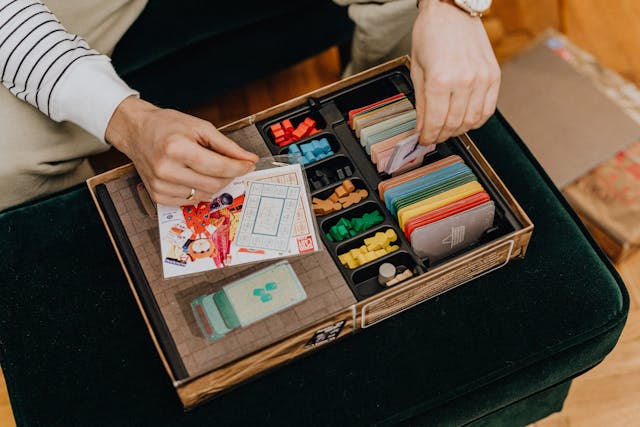
In contrast, games that keep everyone involved at all times tend to feel faster, even if they’re not. When players are constantly thinking, reacting, or anticipating, time moves differently. The experience becomes more immersive and less fragmented.
Another issue is predictability. When a game follows a rigid turn order, players often know when something is expected of them – and when it’s not. That makes it easy to mentally “check out” until their moment returns.
The most engaging games remove that safety. They create situations where players always have something to consider, even if they’re not actively making a move.
In the end, it’s not just about speed. It’s about momentum, and momentum is what keeps a table alive.